


This newsletter explains career fairs and how to get the most out of the experience.

What A Career Fair Is and Where to Find Them
A career fair is an informational event where employers and recruiters meet with job seekers to help potential employees learn more about an industry, role, or organization. Typically, they are organized in conference rooms, convention centers, or large hallways, where employers set up booths and inform the jobseeker about current openings, the application process, and their organization. Career fairs can be held in the community but are most often held at colleges or universities on various occasions throughout the school year.
A career fair can help you prepare for a job as you will:
- Practice professionalism
- Network with potential employers
- Brush up on job searching skills such as interviewing, resume writing, and available job search resources.
Many career fairs are online on websites such as Handshake and Eventbrite. In recent years, there has also been an increase in virtual career fairs posted on these websites. For college students, the career services department at your school may have information about upcoming career fairs and other vocational-related events.
How to Prepare for a Career Fair
Knowing how to prepare for a career fair before attending one is important, as you want to present the best version of your professional self.
Employers may attend a job fair for various reasons, including their desire to access diverse talent, establish face-to-face communications, increase brand visibility, promote specific job opportunities, network, and more.
Before attending a career fair, research and learn about the organizations that will be present so that you know with which employers you would like to speak, which are hiring in your field of interest, their values, and questions you would like to ask. Having knowledge about an organization you plan to approach is important as it can help guide your interactions, questions, and presentation of your professional self.
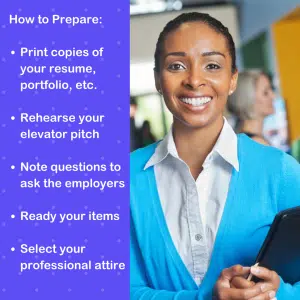
Some additional ways in which you should prepare yourself for a career fair include:
- Printing out multiple copies of your resume tailored to the organizations you are interested in speaking with

- Preparing printed copies of your portfolio, if applicable
- Rehearsing your “elevator pitch.”
- Having a list of questions to ask each employer
- Readying the items you will bring
- Notepad, pen, pencil
- Sensory accommodations or fidget toys
- Selecting your professional attire
- Tops: Blazers, collared shirts, button-downs, polos, dresses
- Bottoms: Dress pants, skirts, chinos, khakis, slacks, dress shoes
Implications of Attending a Job Fair
It is important to make the most of your job fair experience, as it could be one of the best ways to get a job in an organization or industry.
As we mentioned above, don’t hesitate to ask questions of the employers! If you are unsure what to ask, you might consider asking some of the following questions:
- Can you tell me about the different stages of your hiring process?
- In a typical day, what does [open job] do?
- Can you tell me more about the company culture and your experience at the organization?
- How does [company] commit to the professional development of its employees?
Asking questions and engaging with different employers is a great way to network. At the different tables and during your conversations, ask for business cards and inquire about how you can stay in contact with the individual or organization.
After the career fair, it is always a good idea to follow up with the employer by reaching out to the contact on the business card and thanking them for taking the time to speak with you. If you discussed a specific role and/or they encouraged you to apply, notify them of your application and attach a copy of your resume.
If you have LinkedIn, consider connecting with those who gave you their business cards. Following these individuals on LinkedIn is a great way to get updates on the organization and potential job openings. It is also a great way to build out your network!
It is important to remember that recruiters often meet with hundreds of job seekers at career fairs and utilize them for informational sessions. Don’t get disheartened if you follow up with an employer and do not hear back for a few days. Recruiters almost never hire on the spot, although they could encourage you to apply for a position on their website.
Advice Submitted by Hire Autism Navigator, Brigit P.
You should treat a career fair as any other job interview: dress to impress, bring multiple copies of your resume in a professional portfolio, and have questions prepared in advance. Practice common interview questions in advance and review the STAR technique to craft more organized and compelling answers.
Preparation is key—“Do your homework”: Obtain a list of companies ahead of time and research those that align with your career goals and interests. Review the company website and social media, paying close attention to any recent news, industry positions, and job openings.
Prepare and practice your “elevator pitch.” Your elevator pitch should demonstrate your unique value proposition: How is your experience relevant to their company or position needs? How can you add value to their business? How will your unique experience and skills benefit the role or the organization? Develop a short, compelling self-introduction that summarizes your background, skills, and career goals. This pitch is crucial for making a memorable impression quickly and differentiating yourself from other candidates.
Additional Resources